In 2026, paying with cash is becoming less common. Instead, people tap their phones at stores, scan QR codes, or send money instantly through apps. This is the world of mobile payments.
From Apple Pay to Google Pay and Samsung Pay, mobile payments are transforming how we buy, sell, and transfer money.
Let’s break it down in simple terms.
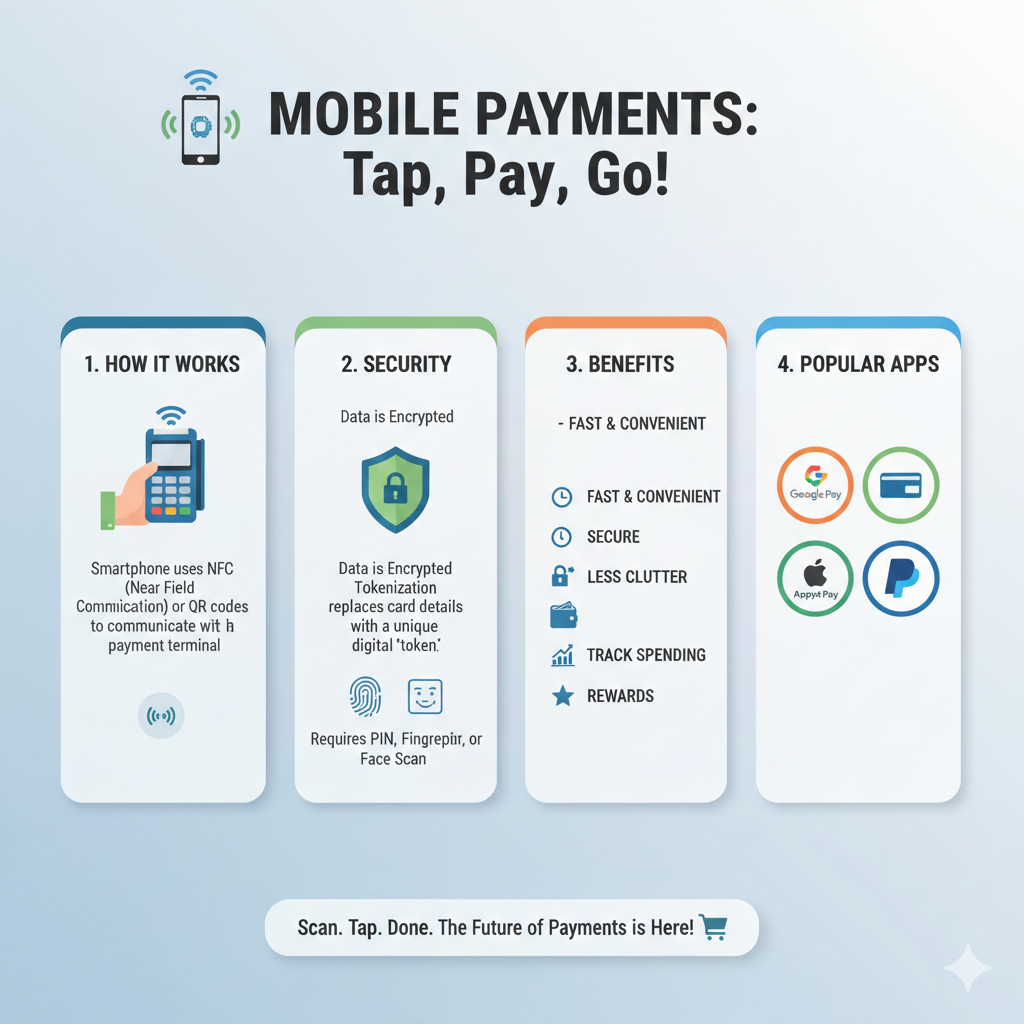
What Are Mobile Payments?
Mobile payments are transactions made using a smartphone or wearable device instead of cash or physical cards.
You can:
- Pay at stores
- Shop online
- Send money to friends
- Pay bills
- Recharge mobile balance
All using your phone.
How Do Mobile Payments Work?
Mobile payments work through different technologies. Here are the main ones:
1️⃣ NFC (Near Field Communication)
This is the most common method in developed markets.
How it works:
- Your card details are securely stored in your phone.
- You tap your phone near a payment terminal.
- The payment is processed instantly.
Used by:
- Apple Pay
- Google Pay
- Samsung Pay
It works just like contactless debit/credit cards.
2️⃣ QR Code Payments
Very popular in Asian countries.
How it works:
- You scan a merchant’s QR code.
- Enter the amount.
- Confirm payment.
This method is widely used in countries like:
- China
- India
3️⃣ In-App Payments
When you:
- Order food
- Book rides
- Shop online
You pay directly within the app using stored payment details.
4️⃣ Peer-to-Peer (P2P) Transfers
You can send money instantly to friends or family using:
Are Mobile Payments Safe?
Yes — and often safer than cash.
Here’s why:
Tokenization
Your real card number is not shared. Instead, a unique encrypted code (token) is used.
Biometric Security
Most phones require:
- Fingerprint
- Face unlock
- PIN
Encryption
Payment data is encrypted during transfer.
If you lose your phone, others can’t access your wallet without authentication.
Benefits of Mobile Payments
✔ Fast transactions
✔ No need to carry cash
✔ Secure authentication
✔ Easy expense tracking
✔ Contactless & hygienic
Mobile Payments Around the World
Different countries use mobile payments differently:
- In United States, NFC payments are common.
- In China, QR-based systems dominate.
- In Pakistan, mobile wallets and banking apps are rapidly growing.
Digital finance adoption is increasing every year.
Mobile Payments vs Traditional Payments
| Feature | Mobile Payments | Cash |
|---|---|---|
| Speed | Instant | Slower |
| Security | Encrypted | Can be stolen |
| Tracking | Yes | No |
| Convenience | Very High | Medium |
The Future of Mobile Payments
Mobile payments are evolving with:
- AI fraud detection
- Cryptocurrency integration
- Wearable payments (smartwatches)
- Biometric-only authentication
As smartphones become more powerful, digital wallets will likely replace physical wallets entirely.
Final Thoughts
Mobile payments are fast, secure, and convenient. Whether you’re tapping your phone at a store or sending money to a friend, this technology is reshaping global finance.
If you haven’t started using mobile payments yet, now might be the perfect time to explore this digital revolution.