In February 2026, 4K is the undisputed king of consumer display resolutions. Almost every new TV, monitor, smartphone flagship, and streaming service defaults to 4K (or labels it as such). But what does “4K” really mean? Why do people say “4K UHD”? Is it worth it over Full HD? And how does it compare to 8K now that the hype has cooled?
This complete guide breaks it down—from pixels and standards to real-world benefits, HDR synergy, and whether you should upgrade in Peshawar or anywhere else.
What Is 4K Resolution?
4K refers to a display or content resolution with approximately 4,000 pixels horizontally. The exact number varies by context:
- Consumer 4K (most common): 3840 × 2160 pixels → Also officially called 4K UHD or Ultra High Definition → Total pixels: ~8.3 million (exactly 8,294,400) → Aspect ratio: 16:9 (standard widescreen for TVs, phones, YouTube, Netflix)
- True/Cinema 4K (DCI 4K): 4096 × 2160 pixels → Used in professional digital cinema projectors and filmmaking → Total pixels: ~8.8 million → Slightly wider aspect ratio (~17:9 or variable for Flat/Scope formats)
In everyday shopping and marketing in 2026, when someone says “4K TV” or “4K video,” they almost always mean the 3840 × 2160 consumer standard. Manufacturers use “4K” and “UHD” interchangeably for this resolution.

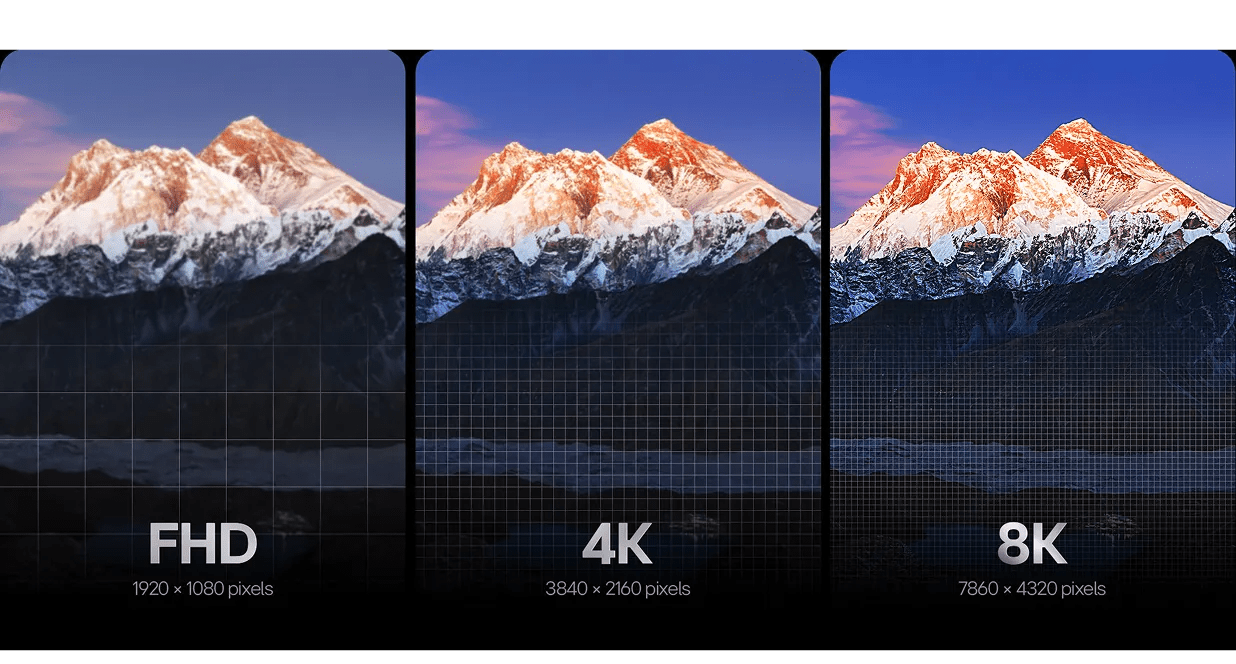
4K vs UHD: The Real Difference (It’s Tiny in 2026)
Technically:
- UHD = 3840 × 2160 (consumer/TV standard, defined by ITU and CEA)
- 4K = 4096 × 2160 (DCI cinema standard)
But in practice for home use:
- All 4K TVs, monitors, phones, and streaming content use 3840 × 2160.
- The extra 256 pixels in cinema 4K are cropped or letterboxed for 16:9 screens.
- You won’t notice the difference on a TV—it’s marketing semantics from the early 2010s.
Bottom line in 2026: Buy a “4K” or “UHD” TV—it’s the same thing for consumers.
How 4K Compares to Other Resolutions
| Resolution | Pixels (Horizontal × Vertical) | Total Pixels | Times More Than 1080p | Common Uses in 2026 |
|---|---|---|---|---|
| Full HD (1080p) | 1920 × 1080 | ~2.07 million | 1× | Budget TVs, older phones, basic streaming |
| QHD / 1440p | 2560 × 1440 | ~3.68 million | ~1.8× | Mid-range phones, gaming monitors |
| 4K UHD | 3840 × 2160 | ~8.3 million | 4× | Flagship phones, most TVs, Netflix/YouTube |
| 8K UHD | 7680 × 4320 | ~33.2 million | 16× | Premium TVs (limited native content) |


4K delivers four times the detail of Full HD—sharper text, finer textures in games/movies, and the ability to sit closer to larger screens without seeing pixels.
Why 4K Looks Better: Pixels + HDR + Color
Resolution alone isn’t everything. Modern 4K shines when combined with:
- HDR (High Dynamic Range) — Wider brightness/contrast range (Dolby Vision, HDR10+, HLG). Bright highlights pop, shadows reveal detail.
- Wide Color Gamut (DCI-P3 or Rec.2020) — More vibrant, accurate colors.
- Bit Depth — 10-bit (over 1 billion colors) vs 8-bit (16.7 million) reduces banding.
- Refresh Rate — 120Hz+ for smoother motion in games/sports.
A good 4K HDR TV often looks dramatically better than a basic 1080p set—even if viewing distance limits raw resolution benefits.
Where You See 4K in 2026
- TVs: Standard on 50″+ models; 4K is mature and affordable.
- Smartphones: Flagships (Galaxy S26, iPhone 17 Pro, Pixel 10 Pro) use 4K displays or record 4K video at 60/120fps.
- Streaming: Netflix, YouTube, Disney+, Prime Video offer native 4K HDR content (with Premium plans).
- Gaming: PS5, Xbox Series X, PC gaming at 4K/60–120fps.
- Laptops/Monitors: 4K OLED panels common in premium ultrabooks and creator displays.
Is 4K Worth It in 2026? (Viewing Distance Reality)
The human eye’s resolution limit depends on size and distance. At typical sofa distances:
- 55–65″ TV: 4K shines from ~1.5–2.5 meters.
- Smaller screens (phones/tablets): Pixel density matters more than raw resolution.
- 8K: Mostly overkill unless sitting very close to 75″+ screens; content is scarce, bandwidth huge.
In 2026, industry consensus: 4K is the sweet spot. 8K adoption stalled—few native sources, massive file sizes, and diminishing returns.
Quick Buying Tips for 4K :
- Look for 4K UHD, HDR10+ / Dolby Vision, 120Hz refresh.
- HDMI 2.1 for gaming (VRR, ALLM).
- OLED/QD-OLED for best contrast; Mini-LED/QLED for brightness/value.
- Streaming needs stable 25Mbps+ internet for true 4K HDR.