In 2026, fitness bands (also called activity trackers or fitness trackers) are everywhere—from budget wristbands to premium smart rings. You’ve probably seen people wearing slim black bands like the Xiaomi Smart Band 10 or Fitbit Charge 6, tracking every step, heartbeat, and hour of sleep. But what exactly are these devices, how do they work, and—most importantly—do they truly help you get fitter, lose weight, or build better habits?
In this detailed guide, we’ll break down the technology behind fitness bands, compare popular models in 2026, and look at what science says about their real impact on fitness.
What Is a Fitness Band?
A fitness band is a wearable electronic device, usually worn on the wrist, designed to monitor physical activity, health metrics, and daily habits. Unlike full smartwatches (e.g., Apple Watch or Samsung Galaxy Watch), fitness bands focus primarily on health & fitness tracking rather than heavy smart features like calling, apps, or payments.
Key differences in 2026:
- Fitness bands → Slim, lightweight, long battery life (often 7–14 days), basic screens, emphasis on steps, heart rate, sleep.
- Smartwatches → Larger displays, GPS, music storage, notifications, shorter battery (1–2 days), more “smart” features.
Many people still call slim trackers “fitness bands” even if they blur lines with smartwatches.
Popular 2026 examples include:
- Xiaomi Smart Band 10 (budget king)
- Fitbit Charge 6 (best overall for most)
- Huawei Watch Fit 4
- Amazfit Bip series
- Garmin Vivosmart or Vivoactive lines
How Do Fitness Bands Work? The Technology Explained
Fitness bands pack sophisticated sensors into a tiny package. Here’s how they track your body and activity:
1. Accelerometer (The Core Sensor)
- A 3-axis (sometimes 6-axis with gyroscope) accelerometer detects motion, acceleration, and orientation.
- It measures tiny changes in speed and direction in X, Y, Z axes.
- Algorithms analyze patterns: repeating arm swings = steps; faster patterns = running; no movement = sedentary.
- Most bands aim for the famous 10,000-step goal, though science now favors personalized targets.
2. Heart Rate Monitoring (Optical PPG Sensor)
- Uses photoplethysmography (PPG): Green (or red/infrared) LED lights shine into your skin.
- Light reflects off blood vessels; the sensor detects blood volume changes with each heartbeat.
- Calculates heart rate (BPM), heart rate zones during exercise, and sometimes variability (HRV) for recovery/stress.
- Accuracy is good at rest/moderate activity but can falter during intense workouts or if the band is loose.
3. Other Common Sensors
- Gyroscope → Improves motion detection (e.g., distinguishing swimming strokes or bike pedaling).
- Altimeter/Barometer → Tracks floors climbed or elevation changes.
- SpO2 (Blood Oxygen) → Uses red/infrared light to estimate oxygen saturation (useful for sleep apnea hints or high-altitude).
- Skin Temperature & EDA (Stress) → Some models detect stress via sweat response or temp changes.
- GPS (in higher-end bands) → Built-in or connected phone GPS for accurate outdoor distance/speed.
All data syncs via Bluetooth to a companion app (Fitbit, Xiaomi Wear, Garmin Connect, etc.), where algorithms calculate:
- Steps, distance, calories burned
- Active minutes, exercise intensity
- Sleep stages (light, deep, REM)
- Readiness/recovery scores
Battery life stays long because sensors activate only when needed, and screens are low-power OLED/AMOLED.
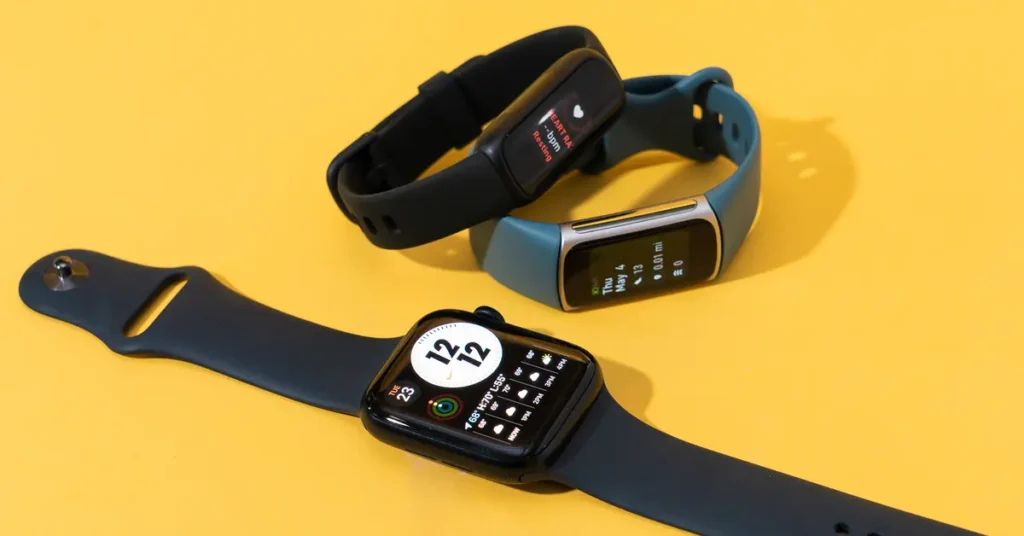
(Example of a modern fitness band showing heart rate and step tracking interface)
Do Fitness Bands Actually Make You Fit? What the Science Says
This is the million-dollar question: Does wearing one lead to real fitness gains?
The Good News
Recent studies (2024–2026) show positive effects:
- Wearable users often increase daily steps by 1,000–2,500.
- One 2025 study found tracker users were 7 times more likely to stick to workouts consistently.
- Another found users 3 times more likely to remain active after a year.
- Motivation tools (badges, challenges, reminders to move, friend competitions) boost adherence.
- Short-term interventions (<6 months) often lead to modest weight loss (4–6 lbs on average in some reviews) and better activity levels.
- They help with awareness: Seeing “you’ve only done 4,000 steps” prompts movement.
The Reality Check
Not all studies are glowing:
- Older meta-analyses (e.g., 2020) found no clear long-term benefit for physical activity or weight loss when used alone.
- Some trials showed people with trackers lost less weight than non-tracker groups (possibly over-reliance on the device instead of diet/exercise).
- Accuracy varies: Steps and heart rate are fairly reliable; calorie burn and sleep tracking are estimates only (often off by 10–30%).
- Long-term adherence drops—many stop using the device after 6–12 months.
Bottom line in 2026: Fitness bands don’t magically make you fit. They are excellent motivational tools and data providers, but real results come from:
- Consistent exercise
- Calorie-controlled diet
- Strength training
- Sleep and recovery
They work best when you act on the data (e.g., hit zone 2 cardio when HR is low, improve sleep hygiene after bad scores).
Pros & Cons of Fitness Bands in 2026
| Aspect | Pros | Cons |
|---|---|---|
| Motivation | Reminders, badges, social challenges | Can cause obsession or guilt |
| Battery Life | 7–14+ days typical | Higher-end models closer to 5–7 days |
| Price | Budget options under $50–$100 | Premium features cost $150–$300+ |
| Accuracy | Good for steps/HR; improving yearly | Calorie/sleep estimates approximate |
| Features | Sleep, stress, SpO2, auto workout detect | No advanced training plans in basic bands |
Which Fitness Band Should You Buy in 2026?
- Best Budget → Xiaomi Smart Band 10 (great basics, long battery, affordable)
- Best Overall → Fitbit Charge 6 (accurate, Google integration, excellent app)
- Best for Serious Fitness → Garmin models (VO2 max, recovery, training load)
- Best Minimalist → Oura Ring 4 (if you prefer no wrist screen)
Final Verdict: Do They Make You Fit?
Fitness bands won’t do the workouts for you—but they can make fitness more visible, gamified, and sustainable. If you’re someone who thrives on data and gentle nudges, a good tracker can absolutely help you move more, sleep better, and build habits. Just pair it with real effort: diet, strength work, and consistency.
Wearing one might not turn you into an athlete overnight, but it often tips the scale toward being more active than you would be without it.
Have you used a fitness band? Did it change your habits—or did you stop wearing it? Share your experience in the comments!