Smartphones are getting more expensive every year. Flagship devices now easily cross $1,000. Because of this, many buyers are considering a smarter option — refurbished phones.
But are refurbished phones worth it? Are they safe? Do they last long?
Let’s break everything down in detail.
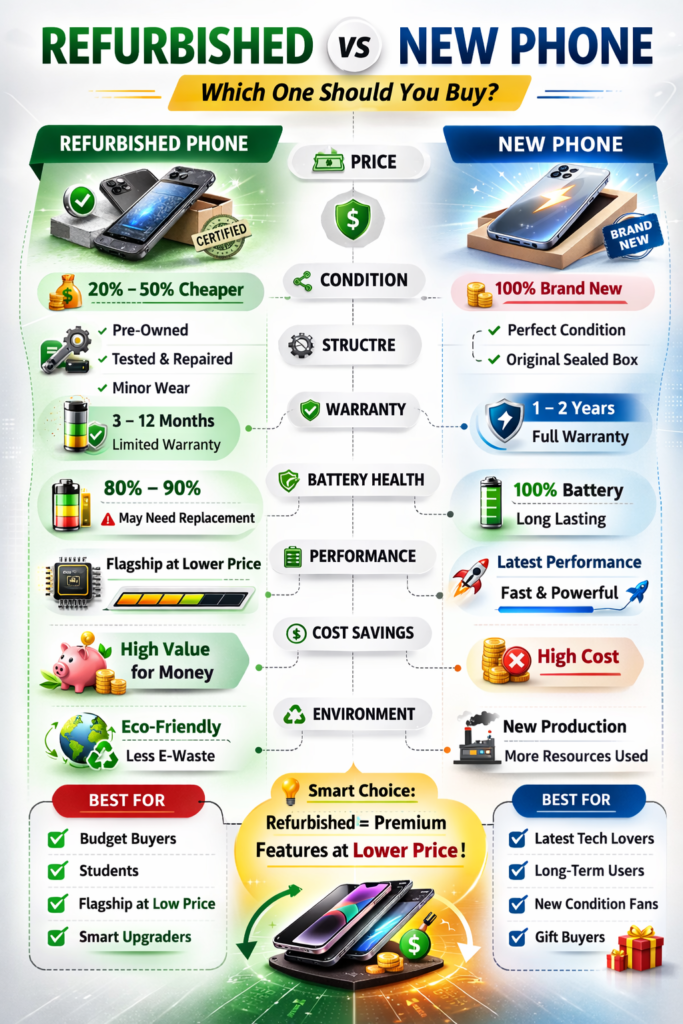
What is a Refurbished Phone?
A refurbished phone is a pre-owned device that has been:
- Returned due to defects or minor issues
- Exchanged by customers
- Used as demo units
- Repaired and tested
- Cleaned and repackaged for resale
It is not the same as a used phone sold by an individual.
Refurbished vs Used vs Open-Box
| Type | Condition | Warranty | Risk Level |
|---|---|---|---|
| Used | Sold as-is | Usually none | High |
| Open-box | Like new | Sometimes | Low |
| Refurbished | Tested & repaired | Often included | Medium–Low |
Refurbished phones usually go through inspection and quality checks before resale.
Why Refurbished Phones Are Popular
1) Huge Price Savings
You can save 20% to 50% compared to brand-new phones.
For example:
- iPhone 14 Pro
- Samsung Galaxy S23 Ultra
- Google Pixel 7 Pro
These flagship devices become significantly cheaper when refurbished.
2) Better Value for Money
Instead of buying a new mid-range phone, you could get a refurbished flagship with:
- Better camera
- Faster processor
- Premium build quality
3) Environment Friendly
Buying refurbished reduces:
- Electronic waste
- Carbon footprint
- Demand for new raw materials
It’s a more sustainable choice.
Risks of Buying a Refurbished Phone
Let’s be honest — it’s not perfect.
1. Battery Health
Most refurbished phones are 1–3 years old. The battery may:
- Have reduced capacity
- Need replacement soon
Some sellers replace batteries, but not all do.
2. Cosmetic Wear
Grading systems exist:
- Grade A – Like new
- Grade B – Minor scratches
- Grade C – Visible wear
Always check the grade before buying.
3. Third-Party Repairs
Some refurbished phones may contain:
- Non-original parts
- Replaced screens
- Aftermarket batteries
This can affect long-term reliability.
Where Should You Buy Refurbished Phones?
Safer options:
- Official manufacturer refurbished stores
- Large certified marketplaces
- Trusted retailers
For example, brands like:
- Apple
- Samsung
Offer certified refurbished devices with warranty.
Avoid random sellers unless they provide:
- Return policy
- Warranty
- Battery health details
Things to Check Before Buying
Here’s your checklist:
✅ Warranty (At least 3–6 months)
✅ Return policy (7–14 days minimum)
✅ Battery health above 85%
✅ IMEI not blacklisted
✅ No activation lock (especially for iPhones)
✅ Check for water damage
Pros and Cons Summary
Pros
- Much cheaper
- Premium features at lower price
- Environment friendly
- Often includes warranty
Cons
- Battery degradation
- Possible cosmetic wear
- Risk of non-original parts
Who Should Buy a Refurbished Phone?
You should consider it if:
- You’re on a tight budget
- You want flagship performance at lower cost
- You don’t care about tiny scratches
- You upgrade phones frequently
Who Should Avoid It?
Avoid refurbished if:
- You want maximum battery life
- You keep phones for 4–5 years
- You need brand-new condition
- You’re buying from an unknown seller
Smart Strategy (Best of Both Worlds)
Instead of buying:
- A brand-new low-end phone
Buy:
- A 1-year-old refurbished flagship
Performance difference can be huge.
Final Verdict: Should You Buy One?
Yes — but only from trusted sources.
Refurbished phones are not bad. In fact, they are one of the smartest ways to save money in 2026 — if you:
- Check warranty
- Verify battery health
- Buy certified devices
If done correctly, you can get a premium smartphone experience at a much lower price.
SEO FAQ Section
❓ Are refurbished phones reliable?
Yes, if bought from certified sellers with warranty.
❓ Do refurbished phones have new batteries?
Sometimes. Always check product details.
❓ Is refurbished better than used?
Yes, because refurbished phones are tested and repaired.