Starlink’s Direct to Cell Connectivity: The Future of Satellite-to-Phone Service Is Here
Elon Musk’s SpaceX has been pushing boundaries with Starlink since its inception, but the Direct to Cell (D2C) feature represents one of its most transformative leaps yet. Announced years ago and now rapidly rolling out in 2026, this technology allows standard smartphones to connect directly to Starlink satellites in low-Earth orbit — no dish, no special hardware, no bulky antennas. Just your existing phone, a clear view of the sky, and suddenly dead zones vanish.
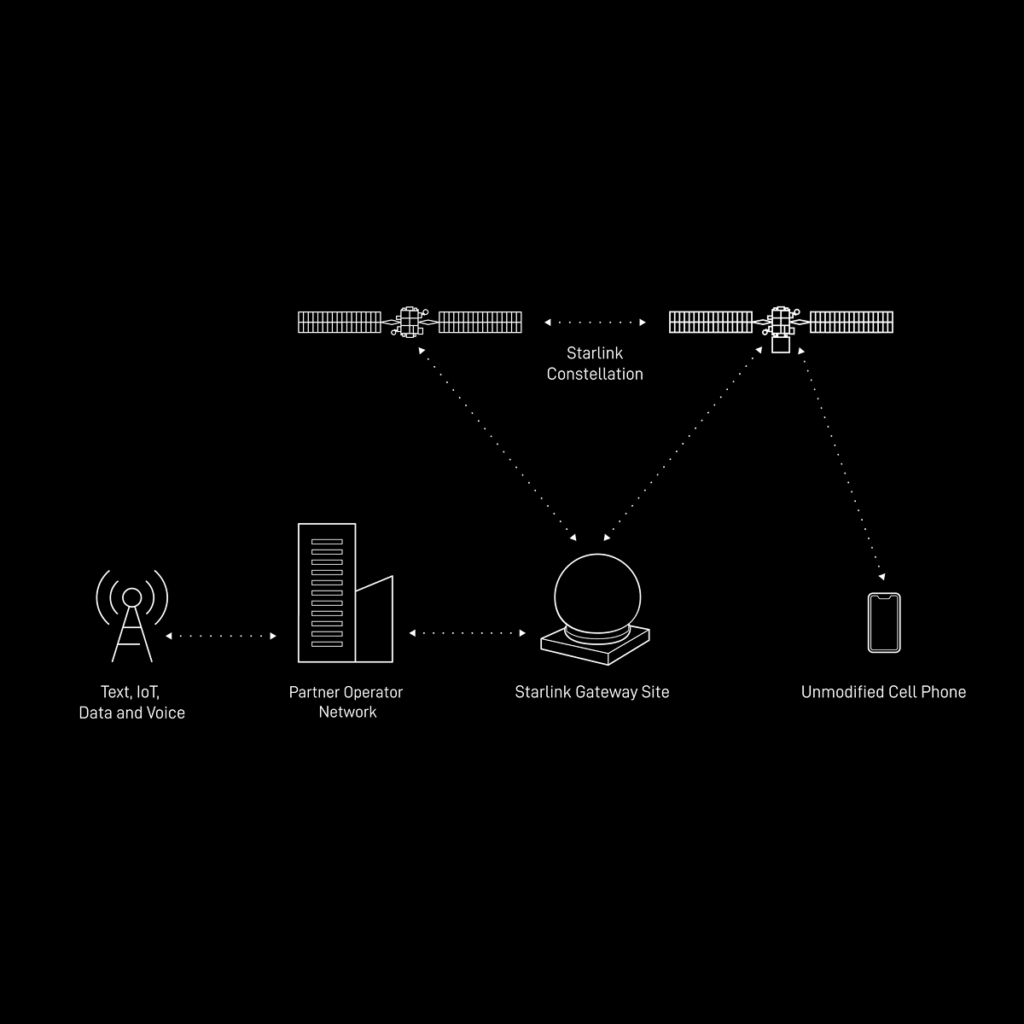
As of February 2026, Starlink Direct to Cell has become the largest 4G coverage provider on Earth, with over 650 dedicated satellites launched and operational across five continents. Millions are already using it for texting, with voice and data expanding. Here’s a deep dive into what this means, how it works, and where things stand today — especially relevant for users in places like Rawalpindi, Punjab, where remote or hilly areas often face spotty coverage.
How Direct to Cell Actually Works
Traditional satellite phones rely on geostationary satellites far away, requiring line-of-sight and specialized gear. Starlink flips the script:
- Low-Earth Orbit (LEO) satellites orbit at ~550 km, much closer and faster-moving, enabling lower latency and better performance.
- Special Direct to Cell satellites act like floating cell towers, using compatible spectrum bands (like midband PCS in partnerships).
- Your unmodified LTE/4G phone connects directly — no app changes, no firmware updates needed for basic texting.
- Satellites use laser backhaul to relay data to the broader Starlink network and ground stations for internet routing.
Current capabilities (early 2026):
- Text messaging (SMS) — Fully operational and the primary live service in most regions.
- Voice calls and limited data — Rolling out progressively, with some partners offering basic browsing or app use in dead zones.
- Speeds are modest (2–4 Mbps shared across large areas initially), but sufficient for essentials like WhatsApp messaging, emergency alerts, or light web access.
The goal, as Musk has stated, is eventual full cellular coverage everywhere on Earth — mountains, oceans, deserts, you name it.
Key Partnerships and Global Rollout in 2026
Starlink doesn’t sell Direct to Cell directly to consumers in most cases; it partners with local mobile operators to integrate the service seamlessly.
- T-Mobile (USA): The flagship partner. T-Satellite launched commercially in 2025 (after beta hype), included free on premium plans. Covers the continental US, Hawaii, Puerto Rico, parts of Alaska — texting everywhere with sky view, expanding to voice/data.
- Other partners: Rogers (Canada), One NZ (New Zealand), Kyivstar (Ukraine — commercial SMS launch), Beeline (Kazakhstan — testing/commercial 2026), Globe (Philippines — rollout expected March/April 2026 for full coverage).
- Africa: Airtel Africa in advanced talks for 14 markets (including Kenya) to bridge rural gaps.
- Asia-Pacific & Beyond: Deals in Vietnam (approved for satellite ops), potential expansions.
What about Pakistan or India?
No official Direct to Cell rollout yet in Pakistan or India as of mid-February 2026.
- In India, regulators approved Starlink’s Gen-1 broadband (dish-based) but rejected Gen-2 (including D2D) over spectrum and framework issues. Fresh approvals from IN-SPACe/TRAI are needed, and talks continue.
- Pakistan has frameworks emerging for satellite internet, with security rules in place, but no confirmed Starlink D2C timeline. Regional progress (e.g., Veon deals covering Pakistan operators) hints at future potential, but it’s not live.
If you’re in Rawalpindi or similar areas with occasional network drops (load-shedding zones, northern hills), this could eventually be huge — imagine texting family during outages or getting alerts in remote spots.
Exciting Developments and Rumors
- Apple integration? Reports suggest Apple is negotiating with SpaceX to embed Starlink D2C in iPhone 18 Pro models (expected 2026), potentially for seamless global coverage beyond emergencies.
- Second-gen upgrades — SpaceX eyes 2027 for enhanced Gen-2 with more spectrum (recent EchoStar deal), promising better speeds and capacity.
- Standalone Starlink phone? Whispers of SpaceX developing its own mobile device rivaling smartphones, but partnerships remain the focus.
Challenges and Realistic Expectations
It’s not magic yet:
- Needs clear sky view (trees, buildings block signals).
- Bandwidth limited in early phases — great for texts/emergencies, not 4K streaming.
- Regulatory hurdles slow rollout in many countries.
- Privacy/monopoly concerns arise as satellite giants enter mobile space.
Still, with over 12 million users relying on Starlink connectivity (including D2C), it’s scaling fast.
Final Thoughts
Starlink Direct to Cell isn’t just incremental — it’s redefining connectivity by making “no signal” a thing of the past for millions. In 2026, we’re seeing the shift from beta hype to real-world utility: texting from remote farms, emergency comms in disasters, or bridging digital divides in underserved regions.
For folks in Pakistan waiting for broader access, keep an eye on PTA/ regulator updates and potential Veon/partner announcements — the tech is proven elsewhere, and regional momentum is building.
Would this solve your connectivity headaches in Rawalpindi? Or are you more excited about potential iPhone integration? Drop your thoughts below — the satellite era is accelerating! 🛰️📱
(Details based on Starlink official updates, SpaceX announcements, and reports as of February 20, 2026.)
Hey
Insert technicalnerds.com in Google Search Index so it can be show up in online search results!
Register technicalnerds.com at https://searchregister.info
We have registered it now sir you can check it. Thanks!