What Happens in an Aeroplan Crash Let’s Dig Deeper
Airplane crashes involve complex sequences of events, from initial failures to impact and aftermath, often analyzed through case studies like Asiana Airlines Flight 214 and Swissair Flight 111. These reveal common factors such as pilot error, technical malfunctions, and survivability elements.code7700+3
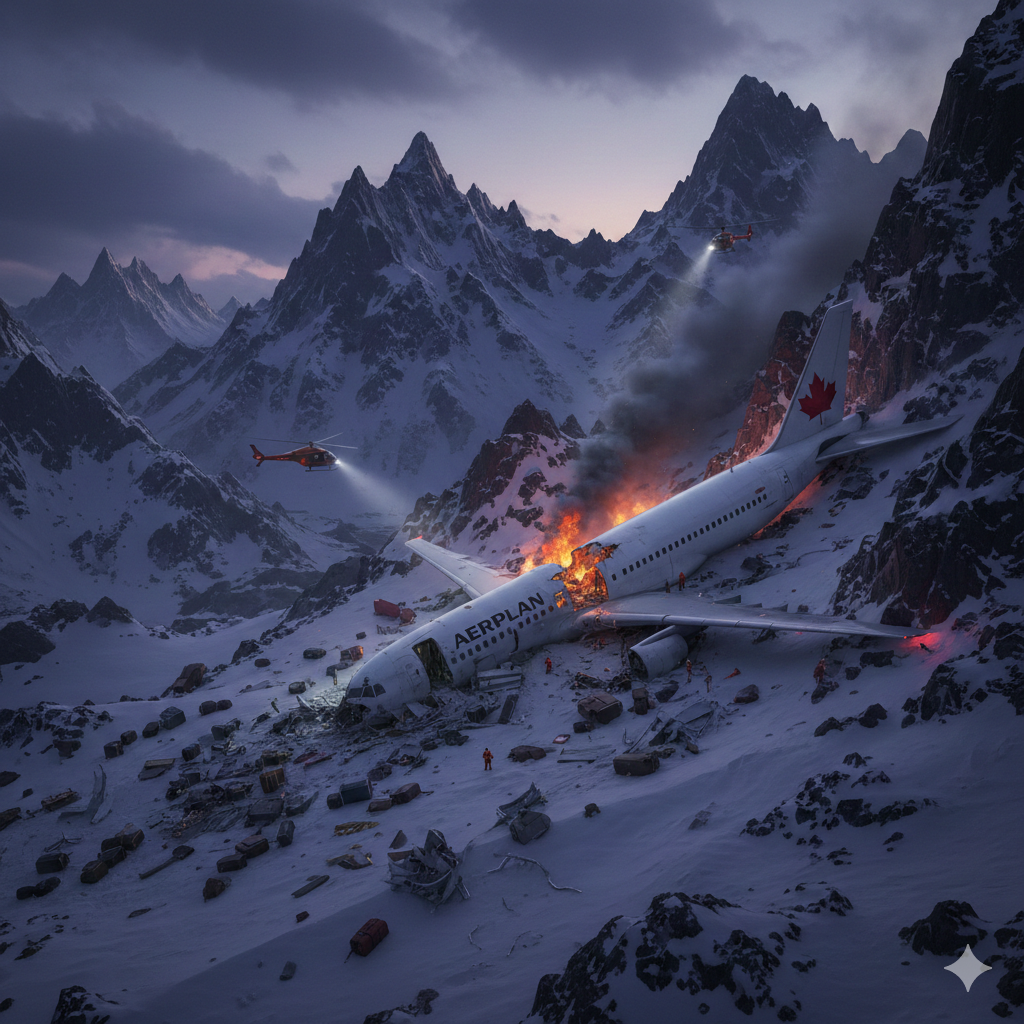
Crash Dynamics
Crashes typically feature rapid deceleration forces, structural breakup, and secondary hazards like fire or smoke. In Asiana Flight 214 (2013), the Boeing 777 approached too low and slow, striking a seawall at San Francisco Airport; the tail and gear separated, the fuselage slid and ignited from engine oil. Swissair Flight 111 (1998) saw an in-flight fire from faulty wiring spread uncontrollably, disabling systems before ocean impact at 350g forces, disintegrating the MD-11.wikipedia+6
Investigation Process
Authorities recover black boxes, wreckage, and conduct forensic analysis in phases: evidence collection, technical review, and reporting. For Asiana 214, NTSB data showed autothrottle deactivation and poor monitoring; reconstruction confirmed pilot mismanagement. Swissair 111’s probe recovered 98% of wreckage, identifying flammable insulation as key; it cost CA$57 million over four years.simpleflying+5
Survivability Factors
Survival hinges on impact forces within human tolerance, fuselage integrity, and post-crash threats like fire. Asiana had 304/307 survivors due to seats staying intact, clear aisles, and quick evacuation despite fire. Swissair killed all 229 as fire and high-speed water impact left no chance.flightsafety+4
Key Lessons Learned
| Case Study | Primary Cause | Safety Changes |
|---|---|---|
| Asiana 214 [en.wikipedia] | Pilot automation error, low speed | Enhanced training on visuals/automation; Boeing docs improved [theconversation] |
| Swissair 111 code7700+1 | In-flight fire from wiring/insulation | FAA standards for flammability, wiring; IFE power separation [en.wikipedia] |
These cases drove global upgrades in training, materials, and systems, boosting overall survival rates to ~95% in non-total-loss crashes.sciencedirect+1
Improvements to aviation safety from major crashes like Tenerife :
Major crashes like the 1977 Tenerife Airport Disaster, the deadliest aviation accident killing 583, spurred sweeping safety reforms worldwide. These changes focused on communication, training, and technology, drastically reducing similar incidents despite rising air traffic.mightytravels+4
Communication Protocols
Tenerife’s fog-bound runway collision stemmed from misunderstood clearances, like “take-off” vs. “OK.” Post-accident, ICAO mandated standardized phraseology (“cleared for takeoff” only for approvals) and readback rules requiring pilots to repeat instructions verbatim. English proficiency became mandatory for international ops, minimizing accents/language barriers.[youtube]pbs+1
Crew Resource Management (CRM)
The crash highlighted captain authority overriding juniors; no junior challenged the KLM pilot’s premature rollout. NASA workshops post-Tenerife birthed CRM training in 1979, emphasizing teamwork, assertiveness, and error prevention; United Airlines adopted it first in 1981, now global standard.pilotlife.co+2
ATC and Tech Enhancements
Overcrowded Tenerife lacked radar; reforms included ground radar, better staffing, and incursion alerts like ASDE-X. Runway incursions dropped via improved lighting, signage, and taxiway designs.level6aviation+1
Key Improvements Table
| Improvement | Trigger from Tenerife | Impact |
|---|---|---|
| Standardized Phraseology [mightytravels][youtube] | Ambiguous “OK” clearance | Fewer miscommunications |
| Readback Protocols [youtube][pbs] | Unconfirmed instructions | Verified actions |
| CRM Training pilotlife.co+1 | Authority gradient issues | 70% error reduction [pilotlife.co] |
| Ground Radar Systems mightytravels+1 | No visibility aids | Real-time tracking |
| English Mandate [youtube] | Language barriers | Safer global ops |